A Case Study in Bible Translation Quality
For 1,200 years, the world’s most influential Bible translation mistakenly said Moses grew horns. Here’s why.
When Moses carried the Ten Commandments down from Mount Sinai, the Israelites noticed something striking about his appearance. He’d grown horns!
Or at least, that’s how he is described in the Vulgate, St. Jerome’s famous fourth-century translation of Scripture. So for the next 1,200 years, Moses’ horns became a matter of record as the Western church adopted that translation.
But Moses did not have horns. Jerome’s mistranslation of a single word underscores the serious responsibility that translators face every day, on every verse. The call to translate Scripture is urgent, but the text must also be accurate and trustworthy.
How Moses Grew Horns
In Jerome’s day, there were no commentaries, scholarly committees, or Internet searches. He wrestled alone with the Hebrew and Greek texts. Exodus 34 presented a dilemma.
After Moses speaks to God, his face is described using a Hebrew word often translated as “radiant” or “shining.” Without vowel markings in early Hebrew texts, however, the same consonants could also mean the term Jerome used: “horns.”
Instead of conveying a dazzling radiance that frightened onlookers and required Moses to veil his face, Jerome’s word choice left a different impression. The mistake became even more troubling when, later, people associated horns with the devil.
Just one wrong word shaped the way people imagined Moses for 12 centuries.
Unintended Consequences
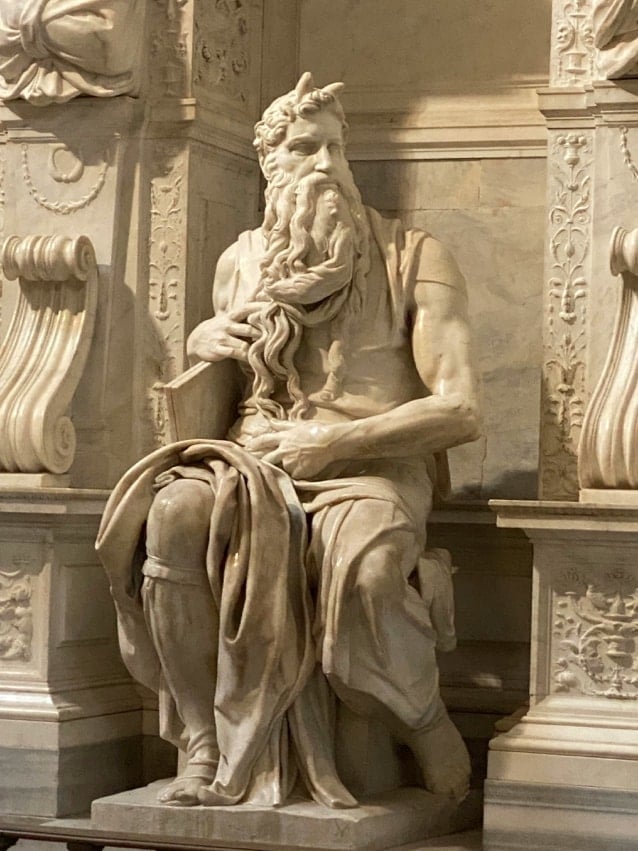
As a result of that error 1,600 years ago, Moses was immortalized with horns by many artists whose works are displayed in prominent locations today. Michelangelo depicted him that way in a larger-than-life-sized marble sculpture you can see at the Church of St. Peter in Chains in Rome. Other artists followed suit in illustrated manuscripts, paintings, and even a fresco.
Jerome’s rendering also led to misunderstandings in sermon texts and Christian teaching for generations. God’s Word continued to faithfully communicate His message of salvation, but there were still outlying consequences.
Lessons for Translators
Two lessons stand out. First, context matters. Jerome might have avoided the error if he hadn’t been working in isolation. Today’s translation teams are pursuing all Scripture for all people with the advantage of contemporary scholarship, comparative texts, and community knowledge.
Second, people who get the Bible for the first time begin to build their lives on it. Translation of Scripture has a cultural impact that can ripple across art, doctrine, and daily life.
Moses’ horns remind us that words matter. They shape images, beliefs, and history. That is why we scrutinize every word: because accurate, trustworthy Bible translation is both a craft and a covenant.