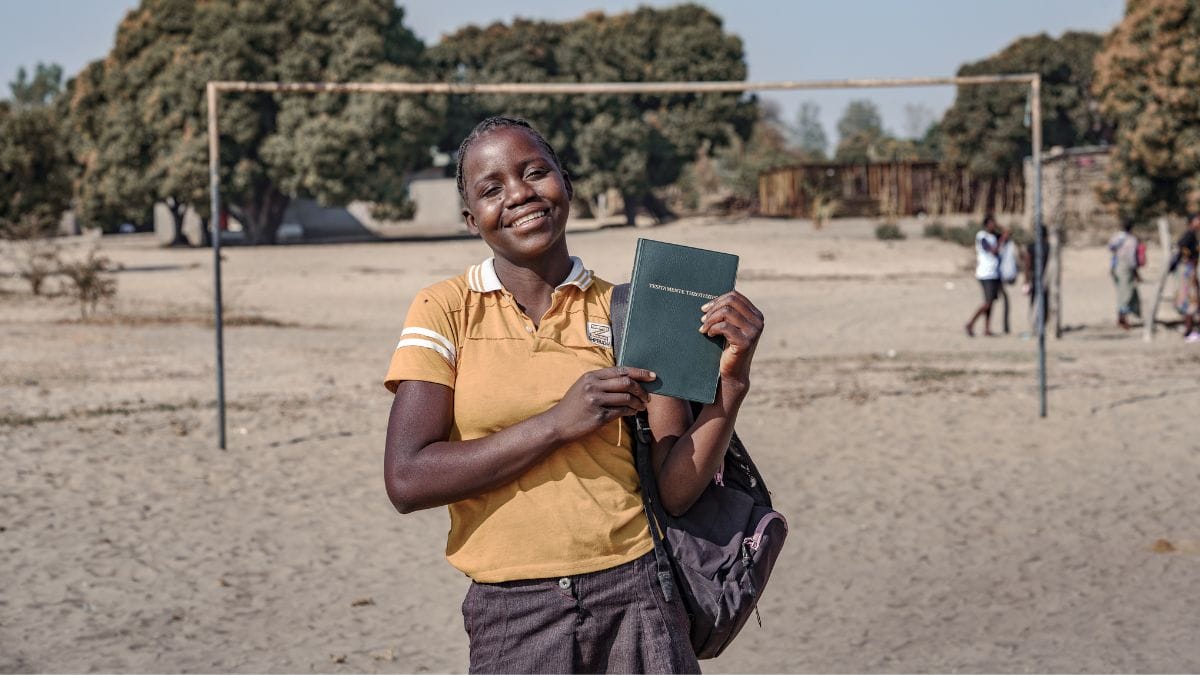
Do You Really Know Scripture?
To be a good Bible translator, you first need to know the message you’re translating.
“Know” meaning the way you navigate your commute without thinking. Or your relationship with that friend you can laugh so easily with when your world feels daunting. Or even, how stories you have heard can feel like they are entirely your own when you share them.
Do you know Scripture like that?
At Seed Company, our desire is for God’s Word to transform lives, so much so that it’s included in our vision statement: God’s Word transforming lives in every language in this generation.
But long before communities have access to a full Bible, translators must do the difficult work of knowing Scripture themselves and allowing it to transform them.
Here are some of the ways they internalize the Bible, ways that could inspire your own time in the Word:
1. Translators study the Bible within community.
Translation is not a solo effort. The process brings a wide variety of people together to wrestle with Scripture messages and make them understandable in a new language. Field partners, local Christians, project managers, pastors, translation consultants, and people in the community all speak into the work. Translators often also collaborate with other translation teams who share similarities in region or language.
These people dive into the Bible asking questions, sharing opinions, and learning together as a group because they value community. And the work, along with God’s Word, unites and challenges them to continue studying Scripture. One team in Asia reports that “differences, conflicts, and divisions” in their community have almost disappeared because of their translation project, and now they “strengthen and encourage each other through the Bible.” The more this happens, the more people desire to truly know God’s Word and let it impact themselves and others.
2. Translators read Scripture with cultural awareness.
Knowing Scripture means being aware of both the Bible’s context of the ancient Near East and the current culture of those reading it. When translating, teams analyze Scripture through a cultural lens and think about the time and place of the authors, what they would have meant, and how that meaning should be transferred to a new time and place.
How do you convey that Jesus is the Bread of Life, the one who meets our daily needs, in a community where bread isn’t commonly eaten? Are sins still washed “white as snow” in places where it never snows or in communities where white doesn’t symbolize purity but instead represents death? What does it mean to be a sheep following the Good Shepherd if you grew up in the city? Translators are forced to grapple with these kinds of questions to help them gain a rich understanding of Scripture’s meaning and how it applies to us today.
3. Translators creatively bring passages to life.
You might expect a translation session to look like poring over passages and changing them into new words in a different language, but it’s more than that. The work also looks like repeating a Bible story over and over again until everyone in the room can say it by heart in their own words. Translators sometimes draw pictures or use objects like dishes or office supplies to visualize what is happening in a specific passage, checking that the translation sets the scene correctly. They might put music to the Psalms to ensure the poetic nature of the book remains intact. Or they act out verses with dialogue, then just narration, then miming, to imagine how characters in the stories may have felt. And after all that, they still share their work with others to refine the translation and make it as accurate and clear as possible.
When translators get to know God’s Word personally as they work, the Bible does what it says it will. It becomes a lamp and a light to guide them (Psalm 119:105). It is alive and active (Hebrews 4:12). They see how the words are breathed out by God to teach and correct, prepare and equip (2 Timothy 3:16-17). It transforms lives.
Gosha, an elderly translator in Ethiopia, has been learning from Scripture for more than 60 years, but he doesn’t tire from studying it. Instead, he says, “I am still a child before it. How great is this book we translate to our own people!”
How well do you know Scripture? What would it be like if you engaged with God’s Word more like a translator does?