Do you know what translating the Bible really looks like? Assumptions about this work are, unfortunately, common. Here are some Bible translation myths we hear that we want to set straight:
Myth #1: If people have the Bible in a majority language, they can just read that.
“Tu palabra es una lámpara a mis pies; es una luz en mi sendero.” – Nueva Versión Internacional (NVI)
“Ta parole est une lampe à mes pieds, Et une lumière sur mon sentier.” – Louis Segond (LSG)
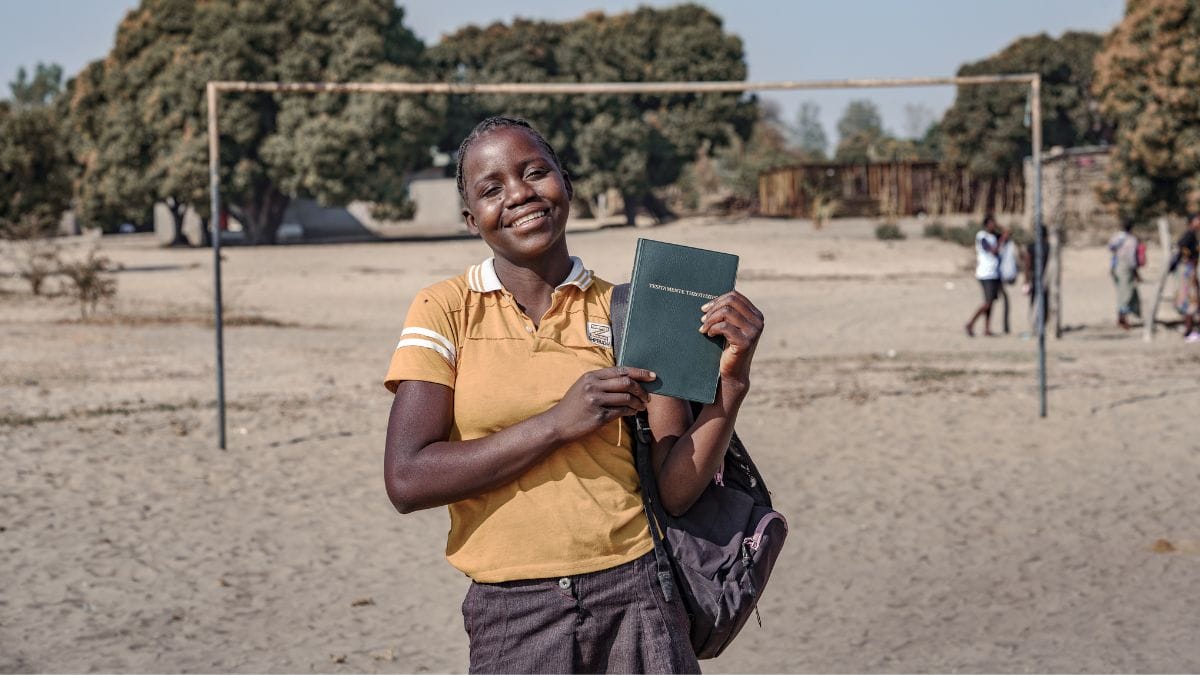
If you speak Spanish or French, the above versions of Psalm 119:105 might mean something to you. But even if you’re fluent in one of those languages, the verse won’t resonate as deeply with you as it would if it was delivered in the language spoken in your home, the language you naturally think, joke, and dream in. If that language is English, then the translation below will have the most impact on you:
“Your word is a lamp to guide my feet and a light for my path.” — New Living Translation (NLT)
For God’s Word to truly illuminate someone’s life, understanding its message can’t just happen on an intellectual level. It must reach the heart. Imagine a god who says he loves you and wants a personal relationship with you, but he doesn’t speak your language. We know that’s not the God of the Bible. God is love, and that message needs translation so that everyone else can know it too.
Myth #2: Bible translation is all written.
It was late at night, but Matthew sat by the sea unable to stop listening. The audio Scripture in his African language played while he hung on every word. He couldn’t believe he had gotten to play a part in this special work, narrating the Bible in his language.
Two-thirds of the world’s population cannot or do not read. While many language groups want a written Bible, translation projects like Matthew’s can also be tailored to oral culture needs. Possible translation formats include oral Bible stories, films like LUMO and the “JESUS” film, audio Bibles, and even sign language videos—all doing what written Bibles do and, ultimately, making Scripture accessible to people everywhere.
Now Matthew and his community can choose to stay awake long after dark, just to hear a little more from the God who speaks to them.
Myth #3: Westerners translate for locals.
Historically, Bible translation often happened through missionaries who would dedicate their lives to living among a people group, learning their language and culture, and translating Scripture. While this still sometimes happens, a shift took place in the 1980s when organizations projected that, in the context of that process, it would take nearly 150 years to translate the Bible into the remaining languages without God’s Word.
Confronted with that reality but hoping to do better, Wycliffe Bible Translators USA asked their former CEO to build a new model to involve more national leadership in the translation work. That was in 1992, and one year later, Partners With Nationals (now Seed Company) was launched by our founder Bernie May. Since that time, we’ve been working to accelerate Bible translation through global partnerships and local ownership. We are currently engaged with 166 partners in 92 countries!
Today, most translation projects happen through translators who are native to the language communities they are working in, and with the support of local churches, organizations, and community members who know and understand their languages best.
Myth #4: The process is always the same.
While most aspects of the translation process remain consistent and result in a final product that is clear, accurate, natural, and acceptable to the community, every project is also unique. Some language groups start with the Gospels while others begin with Old Testament books. Translators in the Pacific region might need to develop an alphabet before writing their translation, but a church in Africa might choose to tell oral Bible stories instead. A community in the Middle East might face government challenges that affect their work, while in the Americas, translators might need to adjust their goals to accommodate a team member struggling with health issues. Some teams might use artificial intelligence to accelerate drafting while others use more traditional technologies. The number of people supporting a project might be a small, tight-knit group or a large pool of church volunteers, and the time it takes them to do the work varies too.
Regardless of how different the work ends up being along the way, God is gracious to be a part of the process, making His Word available to the nations.
Myth #5: Once translation is complete, the work is done.
A translator who lives in a country where being a Christian is dangerous shared with us how he kept Bible commentaries and reference books locked up in a cabinet. Behind that padlocked door, precious resources were safe from thieves who might consider them valuable, small children who might rip pages, and police who might search for illegal items. But when asked how often the books were used, the translator laughed. “Rarely,” he answered.
Scripture can feel like those books—a treasure stored in a locked box—if it’s not being used.
A translation team celebrates when a Bible is complete, but a project finishing is just the beginning. Seed Company works towards full Bibles being translated into languages around the world because God’s Word transforms lives. But only when it is opened, read, listened to, talked about, prayed through, taught, meditated on, shared, and applied.
Communities are encouraged to engage with Scripture throughout the life of a translation project. Then, long after the work is finished, the Holy Spirit and believers in a language group use the Bible to introduce others to Jesus and help them grow in their love for Him.
And that is what the work is really all about.
Know a little more about Bible translation now? Share what you’ve learned by telling a friend or engaging with us on social media.